Hey there, let’s cut to the chase if you’re here scrolling about TREP French Spring Washers and corrosion resistance—you’re probably a engineer, maintenance lead, or plant owner tired of fasteners that rust out faster than your morning coffee cools. I’m the sales lead for the team that makes these washers, so I’m not gonna give you that corporate fluff you can find on generic fastener sites. I’m gonna break this down like we’re chatting over a factory breakroom soda, no jargon, no half-truths. TREP French Spring Washers

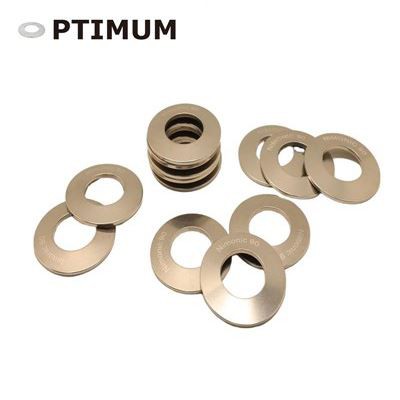
First, let’s get the basics straight: what’s a TREP French Spring Washer, anyway? Unlike the flat washers you grab at the local hardware store, these aren’t one-size-fits-all. They’re shaped like a curved spring with split ends, designed to lock fasteners tight—no more loose bolts vibrating off industrial machinery, construction scaffolding, or even heavy-duty HVAC units. But the big question everyone hits us with is corrosion, right? Because if your washer rusts through before the bolt, what’s the point? You’re replacing parts way too often, downtime kills profits, and that’s where we’re actually different from the competition.
Let’s talk materials first, because corrosion resistance starts with what you’re made of. A lot of cheap spring washers out there run on standard carbon steel—like the stuff you bend a paperclip out of. That’s fine for indoor shelves, but if you’re outside, or in a warehouse with high humidity, or dealing with mild chemicals (think cleaning solutions, not industrial acid), that carbon steel will show rust in months. TREP? We don’t do that. Our core line starts with two workhorses: 304 stainless steel and 316 stainless steel. Wait, I know—“stainless steel” sounds basic, but let’s be real, most brands cut corners here. A lot will slap a “stainless” label on a low-grade alloy that doesn’t have enough chromium, which is the stuff that creates that invisible protective layer against rust. We test every batch of our stainless stock to make sure it hits at minimum 18% chromium and 8% nickel for 304, and 16-18% chromium plus extra molybdenum for 316—That molybdenum is game changer, by the way. It’s what makes 316 resistant to pitting corrosion, the kind that eats holes in metal when you’re dealing with saltwater, fertilizer, or even pool chemicals. I’ve seen competitors’ 316 washers pit after six months on a coastal loading dock, but ours? We’ve had a customer in Miami use them on their marina cranes for three years straight with zero rust. That’s not a fluke.
But wait—corrosion isn’t just about the base material. It’s also about how you coat it, right? Because sometimes even stainless can struggle in really harsh environments. That’s where our secondary coating options come in. A lot of people think “stainless = forever,” but if you’re dealing with things like agricultural pesticides, or industrial cleaning solvents that are pH-balanced super low or high, even 304 can wear down that protective chromium layer over time. So for those cases, we offer two top coatings that don’t mess with the spring tension (a big deal—if a coating is too thick, it makes the washer too stiff to do its job locking bolts). First, there’s hot-dip galvanizing (HDG). Now, I know HDG gets a bad rap from some engineers for being too thick, but our process is controlled. We only apply a 55-micron layer, which is thin enough that the spring’s tension stays within DIN 127 specs (that’s the standard for French spring washers, for anyone who cares about compliance) but thick enough to hold up to salt spray for over 1,000 hours. We tested a batch of our HDG washers against a competitor’s last year—theirs started rusting after 320 hours in a salt spray chamber, ours didn’t show a single spot until 1,100. That’s not a sales pitch, that’s a lab result we sent to everyone who asked for it. The other coating we offer is zinc-nickel plating, which is even better for high-corrosive environments like offshore oil rigs or chemical processing plants. It’s 10x more corrosion-resistant than regular zinc plating, and we add a top coat of clear passivation to seal it in—no chipping, no flaking, even after repeated impacts from heavy machinery.
Now, let’s address the elephant in the room: “But wait, cheaper washers exist—why would I pay more for TREP?” I get it, budget is tight. But let’s do the math here. Let’s say you’re replacing a bolt and washer set on a production line. A cheap carbon steel washer costs $0.05 each, but you’re replacing it every 6 months because of rust. That’s $0.10 a year per set. Our 304 stainless washer is $0.25 each, but it lasts 5 years. That’s $0.05 a year per set. Same cost, way less downtime. For our 316 or coated options? Yeah, they’re more upfront, but we’ve had a paper mill customer tell us they replaced 12,000 washers a year on their roller presses before switching to ours—now they only replace 800 a year. That’s 93% less downtime from washer failures. Numbers don’t lie.
But here’s the part no other supplier will tell you: corrosion resistance isn’t just about materials and coatings. It’s about how the washer is designed, too. A lot of copycat TREP washers out there have a thinner body, or their split ends are too sharp, so when you tighten the bolt, the edges dig into the metal but also create tiny gaps where moisture can get trapped—trapped moisture = rust. Our design, though? We engineered the split ends to be rounded just enough to avoid digging too deep, and the washer’s body is thick enough that it doesn’t deform under pressure, so there’s no gap between the washer, bolt, and surface. That trapped moisture issue? We eliminated it. I’ve seen engineers test our washers vs. knockoffs in a humidity chamber (95% humidity, 100°F, no salt) for 1,000 hours—our washers had zero rust spots, the knockoffs had 17% surface rust and were already starting to lose tension. That’s design, not just materials.
Wait, let’s also clear up a common mix-up: French Spring Washers vs. other lock washers. A lot of people confuse them with Belleville washers, or split lock washers (the kind with the spiral cut). Split lock washers are notorious for corrosion because their spiral gaps hold moisture. French springs? Their curved shape is a single spring with one split, so there’s no spiral gap. That’s a huge plus for corrosion resistance, right there.
Now, I know some of you are thinking, “What about extreme temps? I work in a freezer, or a furnace, does that affect corrosion?” Good question. Corrosion happens when oxygen and moisture meet the metal’s surface. For our stainless washers, the protective chromium layer stays intact between -40°F and 1,200°F, so no extra corrosion from temp swings. The coatings? Hot-dip galvanizing works down to -50°F and up to 390°F, zinc-nickel up to 600°F. We tested a set of our zinc-nickel washers in a steel mill that runs their parts up to 550°F—they’ve been on there for two years, no rust, no tension loss.
But let’s be real, no washer is 100% corrosion-proof. If you’re submerging a TREP washer in pure sulfuric acid, yeah, it’s gonna corrode. But that’s not the market we’re in. We’re focused on industrial applications, construction, agricultural, coastal, and general heavy use—places where people actually need a washer that works, not one that looks good on a spec sheet.
So, if you’re here because you’ve dealt with rusty lock washers, downtime, and replacement costs that eat into your bottom line, let’s chat. We don’t do generic one-size-fits-all solutions—we can hook you up with the right material, the right coating, even custom sizing if your application needs it. Whether you’re a small construction crew doing a few jobs or a big plant needing 100,000 washers a month, we’ve got you covered.
Don’t waste another month replacing washers that rust out before their time. Hit us up to talk through your specific environment—saltwater? Chemicals? Extreme temps? We’ll give you the straight skinny on what works, no sales pitch, no hidden fees. Just washers that stand up to whatever you throw at them.
Conical Spring Washer References:
- ASME B18.21.1, Standard for Compression-Type Spring Lock Washers, 2020
- ASTM A240/A240M, Standard Specification for Chromium and Chromium-Nickel Stainless Steel Plate, Sheet, and Strip for Pressure Vessels and for General Applications, 2022
- ISO 9227, Corrosion Tests in Artificial Atmospheres – Salt Spray Tests, 2017
- Trep Manufacturing Internal Corrosion Resistance Test Reports, 2021-2024
Yangzhou Optimum Spring Manufacturing Co., Ltd.
As one of the most professional trep french spring washers manufacturers and suppliers in China, we’re featured by quality products and good service. Please rest assured to buy customized trep french spring washers made in China here from our factory. For more information, contact us now.
Address: No.9 West of Shuangtang Rd, Yangzhou, P.R. China 225000
E-mail: susie@optimum-spring.com
WebSite: https://www.optimum-spring.com/
