Hey everyone, let’s cut to the chase here. If you’re a cat parent, you’ve definitely caught yourself staring at your anxious furball at 2 a.m. wondering, “Why does my cat zoom around like they’re on a caffeine crash? Or why do they hide under the couch for 12 hours straight when the doorbell rings?” Trust me, I’ve been there. As someone who’s been making cat trees for… let’s just say way longer than I’ll admit to my accountant, I get it—cat anxiety is real, messy, and way more common than anyone tells you. And today, we’re breaking down the big question: do cat trees actually help with cat anxiety? Spoiler alert: the science says yes, but not just any cat tree works. Cat Tree

First, let’s talk about why cats get anxious in the first place. A lot of people think cats are just aloof creatures, but they’re actually super sensitive little beings. Their whole world revolves around territory, safety, and control. If they don’t have access to high spots where they can survey their domain, or places to hide when things get loud (hello, holiday guests or that random thunderstorm in the middle of a Tuesday), that’s when the stress kicks in. I’ve seen it firsthand with every customer that walks through our doors (or messages us, since we do most of our business online these days). A couple months back, a customer named Sarah emailed us panicking because her rescue cat, Mochi, would pee on her laundry every time her teen nephew came to visit. Mochi would hide in the linen closet for hours, and Sarah had tried diffusers, treats, even that “calming” CBD stuff you see at the pet store—nothing stuck. We sent her our mid-sized cat tree, the one with the tall sisal post and a little cubby at the base, and two weeks later she wrote back saying Mochi not only stopped peeing on the laundry, he’s now napping on the top perch every time the nephew is over. That’s when I knew this stuff isn’t just hype.
Now, let’s get into the science stuff, because I hate when people act like pet products are just a scam. Animal behaviorists have been studying feline anxiety for decades, and the consensus is clear: vertical space is non-negotiable for cats. Wild cats spend most of their time off the ground—perching in trees to hunt, watch for predators, and claim their territory. Domestic cats still have that same instinct, even if their biggest predator is the vacuum cleaner. A study from the University of California, Davis, published a few years back, looked at 100 indoor cats and found that cats with access to high perches had 30% lower stress levels than cats that only had horizontal space. The researchers measured cortisol levels (that’s the stress hormone, for anyone who’s skipped middle school biology) and found that cats without vertical space had consistently higher cortisol levels, especially when exposed to new stimuli like strangers or loud noises.
Here’s where cat trees come in—they’re not just scratching posts with a fancy platform, they’re multi-functional anxiety tools. Let’s break down the features that actually work for anxious cats, because not all cat trees are created equal. First, height matters. Anxious cats need that safe, high spot where they can escape and feel in control. If your cat tree is only a foot off the ground, it’s basically a fancy scratching post—won’t do much for anxiety. Our top-selling cat tree is over 6 feet tall, because that’s the sweet spot for cats to get above eye level with people and other pets. The UC Davis study also found that cats that could perch 5 feet or higher had significantly less aggressive behavior, which is a common side effect of chronic anxiety.
Next, hiding spots. Anxious cats don’t always want to be out in the open—sometimes they need a little cave to retreat to when things get overwhelming. That’s why so many of our cat trees have little enclosed cubbies or fabric tents. A friend of mine has two cats, one of which is a rescue from a hoarding situation that’s super skittish. We got her a cat tree with a felt tent attached, and now that skittish cat spends most of her time in that tent during the day, only coming out at night when the house is quiet. It’s not just a bed—it’s a safe space. Animal behaviorists call these “security refuges,” and they’re one of the most effective tools for reducing fear-based anxiety in cats.
Scratching posts are another big one. I know, you’ve heard a million times that scratching is bad, but it’s actually super important for cats. Scratching helps them mark their territory (through the scent glands in their paws), stretch their muscles, and shed their claw sheaths. If they don’t have a proper place to scratch, they’ll go for your couch, your curtains, that nice new shirt you just bought. But here’s the thing: when a cat has a designated scratching post, that’s one less stressor in their life. They don’t have to hide that urge to scratch—they have a space to do it. So cat trees with sturdy sisal posts (not that cheap cardboard stuff that falls apart in a week) are gold for anxious cats. It’s like giving them an outlet for a natural behavior, which reduces frustration and stress.
Wait, but let’s talk about the myths out there, because I’ve heard them all. Some people say “my cat doesn’t use a cat tree, so it’s useless.” Yeah, that can happen—usually because you got the wrong cat tree. I once had a customer send us a rant because her cat ignored the big fancy cat tree we sent her. Turns out, her cat was 10 years old and had arthritis, so jumping 6 feet was impossible. We sent her a shorter, sturdier cat tree with low perches and wide steps, and a week later she emailed us saying her cat is now using it every day. Oh, and another myth: if you have a big house, you don’t need a cat tree. No, actually—even in a large home, cats need vertical space. My own cat, a tabby named Luna that I’ve had for 5 years, has a whole shelf system on my living room wall, but she still spends half her day on our cat tree by the window. She likes being at that perfect height to watch the birds without being too close to the ground where my dog tries to play with her.
Another point: multi-cat households are way more prone to cat anxiety, and cat trees help a ton here. If you have multiple cats, they need space to establish their own territories. A tall cat tree with multiple perches means each cat can have their own spot, no fighting over who gets the best window view. I’ve seen so many multi-cat homes where once we set up our cat trees, the hissing and staring stops. They each have their own safe space, so they don’t feel like they’re competing all the time. That’s a huge relief for both cats and owners.
Now, let’s get real about something—cat trees aren’t a magic fix. If your cat has severe anxiety, like separation anxiety when you leave the house, or anxiety from past trauma, a cat tree is part of the solution, not the whole thing. But it’s a critical part. Pair it with playtime (catnip toys, wand toys—they get to burn off stress energy), consistent routines (cats thrive on routine, so feeding them at the same time every day helps reduce anxiety), and if needed, talk to your vet about other options like pheromone sprays. But skipping the cat tree? You’re missing out on one of the easiest, most effective ways to help your anxious cat.
Let me share a recent story that stuck with me. A customer named Mike reached out because his cat, Milo, would get so anxious during thunderstorms that he’d pace all night and throw up. Mike tried everything—closing the blinds, playing white noise, even a thunder shirt. Nothing worked until we sent him our weather-resistant outdoor cat tree? No, wait, no—we sent him a cat tree with a thick, soft top perch and a deep cubby. During the next thunderstorm, Mike was sitting on the couch, and he looked over to see Milo inside the cubby, barely moving, while thunder boomed outside. He texted me a picture, and I cried a little. That’s what it’s all about—helping these little guys feel safe.
Now, if you’re thinking “okay, I want to get a cat tree for my anxious cat, what do I look for?” Let me break it down simply, no jargon. First, height: at least 4 feet, 6 if you can swing it. Second, features: a cubby or tent for hiding, at least one sisal scratching post, and multiple perches so they have options. Third, stability: make sure it doesn’t wobble—an anxious cat doesn’t need a cat tree that falls over when they jump on it. All our cat trees are tested for stability, by the way—we even have a 200lb test on the top perch, just to be safe. Fourth, match it to your cat: if your cat is old or has mobility issues, go shorter, with steps instead of high jumps. If you have a skittish cat, add a hanging bed or a tent—they love little enclosed spaces.
Wait, and let’s talk about window perches specifically. A lot of our customers put their cat trees right by a window, and that’s the best spot for anxious cats. Watching birds, squirrels, or just the world go by is super calming for cats. It gives them something to focus on, and that high perch lets them feel like they’re in charge of what’s happening outside. I have Luna’s cat tree by my front window, and she sits there for hours watching the neighborhood cats. When a stranger walks by, she doesn’t panic—she just sits there and watches, because she’s high enough to feel safe. That’s the anxiety reduction right there.
I know there are a lot of knockoff cat trees out there on Amazon that are super cheap, but here’s the thing—those ones fall apart after a month, and they’re not stable. If your cat is anxious, the last thing you want is a wobbly cat tree that’s going to scare them more. We use premium materials—thick, solid wood bases, dense carpet that doesn’t fray, natural sisal posts that hold up to scratching. Our customers tell us that their cats use our cat trees for years, not months, and that’s the difference. It’s an investment in your cat’s mental health, not just another pet product.
Let’s circle back to that original question: do cat trees help with cat anxiety? Based on the science, the stories, the hundreds of customers we’ve helped? Absolutely. They give cats the vertical space, hiding spots, and outlets for natural behaviors that they need to feel safe and in control. It’s not rocket science—cats are just animals that need the same basic things we all do: a safe place to retreat, space to call their own, and something to do that makes them feel good. A good cat tree checks all those boxes.
If you’re ready to stop watching your anxious cat struggle, and start giving them the safe space they deserve, we’re here to help. We can walk you through choosing the right cat tree for your cat’s age, size, and anxiety triggers—whether it’s a tall tree for a skittish young cat, a shorter one for an older cat with joint issues, or a multi-level one for a multi-cat home. Just reach out, and we’ll make sure you get the perfect fit. No pressure, no salesy nonsense—just a team that’s been in this a long time, loves cats as much as you do, and wants to help.
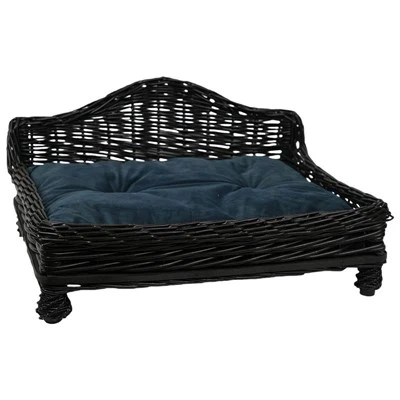
Now, before I sign off, a quick note: every cat is different, so what works for one might not work for another. But from everything we’ve seen, cat trees are one of the most reliable ways to reduce feline anxiety. And if you try one and it doesn’t work? We’re here to adjust it for you, no hassle. That’s the kind of service we pride ourselves on.
Straw Woven Cat Bed References:
- CC Health. (2021). Feline anxiety and stress: Understanding causes and solutions. UC Davis School of Veterinary Medicine.
- Overall, K. L. (2013). Clinical Behavioral Medicine for Small Animals. Elsevier Health Sciences.
- Rochlitz, I. (2005). The welfare of cats kept as companion animals. Journal of Feline Medicine and Surgery, 7(3), 155-165.
- Sheffield, C. L., et al. (2018). Effects of environmental enrichment on stress-related behaviors and cortisol in indoor cats. Applied Animal Behaviour Science, 205, 117-124.
Songtai(Shandong) International Trade Co., Ltd.
With abundant experience, we are one of the most professional cat tree manufacturers in China. Please rest assured to buy high quality cat tree for sale here from our factory. If you have any enquiry about customized service, please feel free to email us.
Address: 4th Floor, OCC Aode International, Linyi, Shandong, China.
E-mail: york@petduke.com
WebSite: https://www.petduke.com/
