Hey there, if you’ve ever leaned in to press a button on something—say, a microwave that’s being finicky, a gadget switch that works only when you nudge it just right, or even a industrial control panel that gets banged around nonstop—you’ve probably wondered: why does that button take so much (or so little) force to push? As a push button switch supplier, I get this question all the time, especially from folks sorting through parts for custom electronics, building production lines, or just troubleshooting why a switch keeps failing. Let’s break this down like we’re chatting over coffee, no boring engineering jargon overload. Push Button Switch

First off, let’s get one thing straight: there’s no “one-size-fits-all” push force for a push button switch. It’s not a number plucked out of thin air—there’s actually a whole bunch of small, practical factors that decide how much oomph you need to press one. Let’s start with the basics: I’ve seen everything from 1N (that’s like the weight of a single AA battery sitting on your finger) to 50N (about the force you’d use to close a sturdy car door) in the switches I stock. Yeah, that’s a massive gap, and it’s all about what the switch is going to be used for.
Let’s talk about the main parts that actually create that push resistance. Every push button switch has a few core components that fight back when you press down. First, there’s the actuator—the actual button top you press. That’s usually plastic (we use polycarbonate for most standard ones, since it holds up to scratches) and it’s connected to a stem that runs down into the switch’s body. Then there’s the contact assembly: most small electronic push buttons are either tactile (they click when you press them) or non-tactile (just a smooth press to connect), but both have a mechanism that needs to move to close the circuit. Oh, and the big one: the return spring. That little coil or flat spring inside the switch is what pops the button back up after you let go. The tighter that spring, the more force you need to push the button down enough to get the contacts to align right. I’ve had customers ask me, “Can I swap a tight spring for a loose one?” and yeah, technically you can—but that messes with how consistent the switch is. More on that later.
Next up, tactile feedback. That click you hear when you press a button? That’s not just a sound for fun—it’s a safety thing for users, and it ties directly to push force. A tactile switch has a metal dome (or a rubber dome, for cheaper ones) that flexes past its “snap point” when you press it. The force needed to get that dome to snap is a big chunk of the total push force. If you want a super sharp, snappy click, you need a stiffer dome, which means more push force. If you’re making a kids’ toy, you want light force so little fingers can press it—we offer rubber dome tactile switches that take like 2N, perfect for that. If you’re building a control panel for a forklift, where a worker might be wearing thick gloves, you need enough force to stop accidental presses, but not so much that they have to strain their wrist all shift—we’ve got medium-stiff metal dome tactile switches at around 10N for that exact use case. I always tell customers to test with their target user’s finger (or a glove, if that’s the case) because what feels light to me might feel impossible to someone with small hands or a tool-worn grip.
Then there’s the environment the switch is going to live in, which is a huge one I don’t think a lot of first-time buyers think about. If your switch is going outdoors, in a car engine bay, or on a factory floor where it’s exposed to dust, moisture, extreme hot or cold, the push force has to account for that. For example, in a factory with a ton of metal dust, if the switch isn’t sealed tight, dust can get in between the stem and the switch body, making it stick. To compensate, we add a bit extra tension to the spring—so even if there’s a tiny bit of gunk, the button still moves freely, but that means the push force goes up by like 2-3N. We have IP67 rated switches (totally dust-tight, can be submerged) for these environments, and their push force is around 8-12N, compared to 5-7N for a regular indoor switch. Cold weather also makes plastics stiffer and springs tighter—so a switch that’s rated for 5N at room temp might jump to 7N at -10°C, which is something we note on every product spec sheet I send out. Always check that, okay? I once had a customer who installed a bunch of switches in a refrigerated display case, and they came back complaining the buttons were too hard to press—turns out they ordered standard indoor switches, not cold-rated ones. Oops.
Accidental actuation is another big factor here. No one wants a button that’s so easy to press that it gets triggered by a bump, a gust of wind, or a strap on a bag rubbing against it. That’s why some switches have higher push forces—they’re designed for applications where accidental presses would cause a problem. For example, medical equipment: a wrong button press on a defibrillator or an infusion pump could be deadly, so those switches usually have push forces of 15N or more, with positive tactile feedback so the user knows for sure they pressed it right. Industrial machinery control panels, aircraft cockpit switches, even some high-end gaming controllers—all of these use stiffer switches to prevent mistakes. On the flip side, a smart home light switch that you press 10 times a day? You don’t want to have to put your whole weight into it, so light force (under 5N) is the way to go there.
Wait, let’s get into the specs side of things, because if you’re shopping for switches, you’re going to see “actuation force” listed everywhere— that’s exactly the push force we’re talking about here. Important note: actuation force is the force needed to actually close the circuit, not the force to move the button all the way. A lot of people mix those two up! For example, a switch might have a total travel of 2mm, and the actuation force is measured at the point where the contacts connect, which is usually 1.5mm in. So you don’t have to push the full distance to register a press, but the force at that 1.5mm point is what matters. I always explain this to customers who get confused when they test a switch and think it’s too hard—they’re measuring the force at the very end of the travel, not the actuation point. We include a diagram with every spec sheet that shows that exact point, so people don’t make that mistake.
Now, what factors affect push force over time? Because a switch that takes 5N new might take 7N after 10,000 presses. That’s where our quality control comes in, as a supplier. The spring is the main culprit here—if we use a cheap spring that loses its tension over time, the push force will fluctuate, or the switch might stick. We use music-grade steel for all our switch springs, which has way better fatigue resistance than regular steel—so even after 100,000 actuations, the push force only changes by 0.5N max. Also, the contact surfaces: if they’re made of cheap steel, they can corrode or wear down, which makes them stick, increasing the force needed. We use gold-plated contacts for most standard switches, which are corrosion-resistant and smooth, so they slide against each other without extra friction. I’ve seen competitors’ switches that start out at 6N and go to 10N after 5,000 presses—we test every batch of our switches to make sure they hold steady, and we guarantee that the actuation force is within ±10% of the listed number for the life of the switch.
Let’s go through common use cases to make this concrete, since numbers are easier than vague terms.
- Consumer electronics: TV remotes, smart speaker buttons, phone power buttons. These need light force, usually 1-5N. Perfect for tiny, nimble fingers, and they get pressed hundreds of times without wearing out.
- Home appliances: Microwave door switches, coffee maker brew buttons, washer cycle selectors. These are medium force, 5-10N—strong enough that you don’t press them by accident when reaching in the microwave, but easy enough for an adult’s finger to press multiple times a day.
- Industrial/automotive: Forklift control panels, car door lock switches, conveyor belt stop buttons. 10-20N here, since they’re used in rough environments, often with gloves, and need to prevent accidental presses.
- Safety-critical: Medical devices, aircraft switches, fire alarm controls. 15-50N, super stiff, positive click, almost zero chance of accidental actuation.
If you’re in the market for push button switches, here’s my quick cheat sheet for figuring out what push force you need. First, ask: who’s using it? Kids? Wearing gloves? Elderly folks with weaker hands? That changes everything. Second, where’s it going? Outdoor? Cold? Dusty? That adds to the required force. Third, what happens if it gets pressed by accident? If it’s a switch that turns off a machine, you need stiff. If it’s a light switch, light is fine.
And before I wrap this up, let’s talk about why working with a supplier that actually knows this stuff matters. A lot of cheap switch sellers just list “actuation force” as a single number without context, or their switches don’t meet that number consistently. As someone who’s been in this game for years, I’ve had customers come to me after wasting money on 10,000 switches from a different supplier that said they were 5N, but when they got them, they were 3N or 7N, which messed up their whole product design. I test every incoming component, every assembly run, and I’ll work with you to tweak the push force if your application needs it—no one-size-fits-all garbage here. Whether you need a custom 3N switch for a wearable medical device or a heavy-duty 18N switch for a construction robot, I can source or build it to your specs.
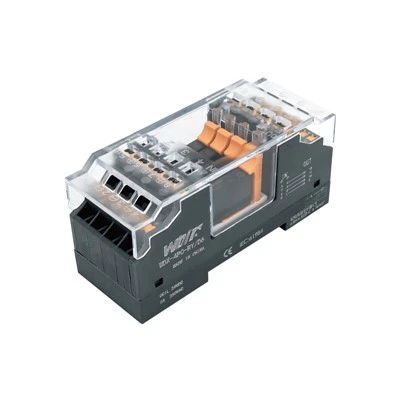
If you’re working on a new product, troubleshooting a faulty switch, or just looking to upgrade your current switch components, hit me up. We can talk through your exact use case, send over test samples, and make sure you get the right push force (and all the other specs that matter) for your project. Don’t settle for switches that don’t perform like you need them to—reach out anytime.
Spring Terminal Block References:
- “Pushbutton Switches: Engineering Fundamentals”, TE Connectivity, 2022.
- “Actuation Force and Tactile Feedback in Switch Design”, Omron Electronic Components, 2021.
- “Environmental Factors Affecting Switch Performance”, Honeywell Sensing and Control, 2020.
- “Fatigue Resistance of Switch Springs”, Switch & Component Technology Journal, Vol. 14, No. 2, 2019.
Zhejiang Weide Electric Co., Ltd.
Zhejiang Weide Electric Co., Ltd. is one of the most professional push button switch manufacturers and suppliers in China, featured by quality products and low price. If you’re going to buy the newest push button switch, welcome to get free sample from our factory. We also accept customized orders.
Address: No. 555, South Binhe 2nd Road, Yueqing City, Zhejiang Province, China
E-mail: zjwdir@wdirele.com
WebSite: https://www.chweide.com/
