Hey there, let’s cut to the chase—if you’re anything like the folks I chat with every day, oxidation on metal parts has probably driven you a little crazy. You’ve probably Googled “Can I use a washer to prevent oxidation?” a dozen times, found a bunch of vague answers, and left more confused than when you started. Let me break this down straight, since I’m actually a supplier of these little metal heroes, and I see oxidation headaches all the time for our customers. Washers
First, let’s get one thing clear: oxidation happens when metals (steel, aluminum, copper, whatever) react with oxygen and moisture in the air. You know that red crust on a steel fence post, or that dull, fuzzy haze on a copper pipe? That’s oxidation eating away at the material, weakening it over time. Now, here’s the big question: can a washer stop that? The short answer is—sometimes, but it’s not a magic fix. It’s a tool, and like any tool, you gotta use it right.
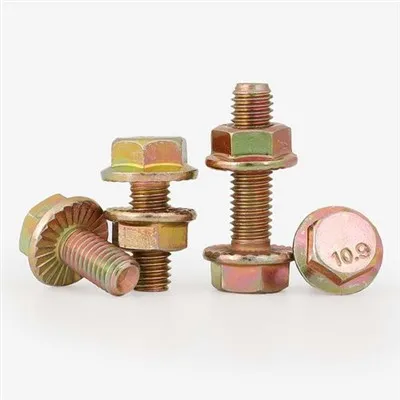
Wait, hold up—let’s make sure we’re talking about the same kind of washer here. I don’t mean those little plastic rings you use to hang art. I’m talking about hardware washers: flat, thin rings with a hole in the middle, made of all kinds of materials—stainless steel, zinc-plated steel, brass, aluminum, even specialty stuff like nylon or silicone. These aren’t just for spreading the load of a bolt; their design (material, coating, fit) is exactly what makes them work for oxidation control.
Let’s start with how washers help prevent oxidation in the first place. Most oxidation starts at the gaps or seams where two metal parts meet. Ever tightened a bolt onto a steel beam without a washer? You might’ve noticed rust starting to form right where the bolt presses into the metal. That’s because the contact point traps moisture—condensation from humidity, rain, even sweat from your hands—plus, if you’re using dissimilar metals (like a steel bolt and an aluminum beam), that’s a recipe for galvanic corrosion, which is a faster, meaner cousin of oxidation. A washer acts as a barrier here. It seals that tight contact spot, keeps moisture and oxygen out, and if it’s the right material, it stops that dissimilar metal reaction from happening.
But here’s where people mess up: using the wrong washer. Last year, a customer came to me with a problem—his bike frame was rusting where he’d mounted a steel rack, and he swore he’d used washers. Turns out, he used cheap, uncoated steel washers. Those rusted themselves in like three months, and the rust seeped right into the frame. If he’d used a zinc-plated or stainless steel washer, that would’ve been a totally different story. Zinc plating is like a sacrificial shield: it corrodes before the underlying steel does, so it keeps oxidation away from the part it’s protecting. Stainless steel, on the other hand, has a chromium layer that forms its own protective oxide coat—so it doesn’t rust easily at all.
Let’s get into the science a little (no need to grab your high school chem notes, I promise). For a washer to actually prevent oxidation, it has to do two key things: 1) block the ingress of water and oxygen to the metal surface you’re protecting, and 2) not contribute to corrosion itself. If your washer is made of a material that corrodes faster than the part you’re covering, that’s counterproductive. Like that uncoated steel washer I mentioned earlier—its rust will spread, because rust is porous, so moisture and oxygen can get through and attack the main metal.
Another big one: fit matters. If a washer is too small, it won’t cover the entire contact area. If it’s too big, it might not seat flat, leaving gaps. I’ve had customers bring in washers that were loose around the bolt, so water would pool in the gap between the washer and the part. That’s like using a screen door to keep out a hurricane—useless. We make sure all our washers are precision-machined to fit standard bolt sizes, so they sit flush and seal the gap properly.
Now, let’s talk about when washers might NOT be the best bet. If you’re working with a really high-moisture environment—like a boat in saltwater, or a pipeline underground—washers alone won’t cut it. But they’re a critical part of a bigger system: pair a good stainless steel washer with a thread sealant or a rubber gasket, and you’ve got a solid defense against oxidation. A lot of people overlook that—they think one part is enough, but it’s the combination that works.
Wait, let’s throw in a real example. A construction customer of ours used to use regular galvanized washers for steel bridge supports. After two years, they noticed rust along the bolt lines. We suggested switching to marine-grade stainless steel washers, plus a neoprene gasket between the washer and the steel. Last I checked, five years later, those supports are still clean—no oxidation, no rust. That’s the right use case: the washer wasn’t the only fix, but it was the foundation.
What about other materials? Nylon washers? They’re great for non-metal parts, like mounting plastic trim. They insulate dissimilar metals, so no galvanic reaction, and they don’t rust themselves. But if you use a nylon washer on a steel pipe, it might not hold up to extreme heat or heavy pressure, so that’s not the move. Brass washers are another popular one—they’re corrosion-resistant, look nice, so they’re common for decorative applications, like railings or door hardware. But brass can be soft, so if you’re dealing with a high-torque bolt, it might deform and break that seal we talked about.
Let’s clear up a common myth: some people think any washer will work, no matter the material. Nope. I’ve seen guys grab random washers from their garage, use them on a classic car restoration, and end up with spots of rust right where the washer sat. Why? Because that random washer was made of low-quality steel, no coating, so it oxidized, and the byproduct transferred to the car’s metal. It’s like putting a rotting log next to a fresh piece of wood—you’re just spreading the problem.
So, to circle back to the original question: Can I use a washer to prevent oxidation? The answer is a resounding yes—if you choose the right one, install it correctly, and pair it with other protections when needed. But you can’t just grab any old washer and hope for the best. That’s where we come in, right?
As a washer supplier, we don’t just sell rings—we help people figure out which one is right for their job. Whether you’re a DIYer fixing a fence, a contractor working on a commercial build, or a restorer bringing back a vintage motorcycle, we’ve got options: zinc-plated for general use, stainless steel for harsh environments, nylon for insulators, brass for decor. We even do custom washers if you’ve got a weird size or specific material needs.
Here’s the thing: oxidation isn’t something you can ignore. It weakens parts, makes them fail early, and ends up costing way more in repairs than just using the right washer upfront. I’ve talked to so many customers who tried to skip the washer or use the wrong one, and they ended up back here, frustrated, asking for a solution. The good news is it’s simple: pick the right washer, fit it right, and you’ll save yourself a ton of hassle down the line.

If you’re not sure which washer to use, or you’ve got a oxidation problem you’re trying to fix, don’t overthink it. Hit us up to chat through your project—we’ll break down what works, what doesn’t, and get you the washers that’ll actually do the job. No jargon, no pressure, just straight answers from people who’ve been in this game for years.
Hex Bolt References:
- Nace International. (2021). Galvanic Corrosion in Metal Fastening Systems.
- American Society of Mechanical Engineers. (2019). Design Guidelines for Corrosion Prevention in Structural Fasteners.
- Copper Development Association. (2020). Corrosion Resistance of Brass and Copper Alloys in Atmospheric Environments.
- International Organization for Standardization. (2018). Standard Test Methods for Oxidation Resistance of Metal Washers.
- Fastener Technology Association. (2022). Selection and Installation of Washers for Corrosion Control.
Jiaxing Jinling Hardware Technolgy Joint Stock Co., Ltd.
As one of the most experienced washers manufacturers and suppliers in China, we also support customized service. Please feel free to buy bulk high-grade washers made in China here from our factory. For quotation and price list, contact us now.
Address: No.32, Shenjiadai, Xuyouche Village, Qinshan Subdistrict, Haiyan County, Zhejiang Province, China
E-mail: jlzxl@jinlingfstn.com
WebSite: https://www.china-nut-factory.com/
